1. Introduction to Guidewire Automation Testing
Guidewire Automation Testing has become an essential part of delivering reliable and scalable insurance applications. Insurance companies rely heavily on digital platforms to manage policies, claims, and billing operations, making Insurance Software Testing crucial for maintaining system stability and performance. With the rapid adoption of automation, organizations are increasingly implementing GT Frameworks to streamline their testing processes and reduce manual testing efforts. These frameworks enable testers to automate repetitive test cases efficiently while ensuring higher accuracy and faster delivery cycles. As the demand for digital transformation continues to grow, Automation Testing for Guidewire Applications has emerged as a critical skill for QA professionals working in the insurance technology sector. Understanding how to implement automation using robust frameworks allows teams to enhance product quality, accelerate testing cycles, and support continuous software releases in modern enterprise environments.
2. What is Guidewire Platform?
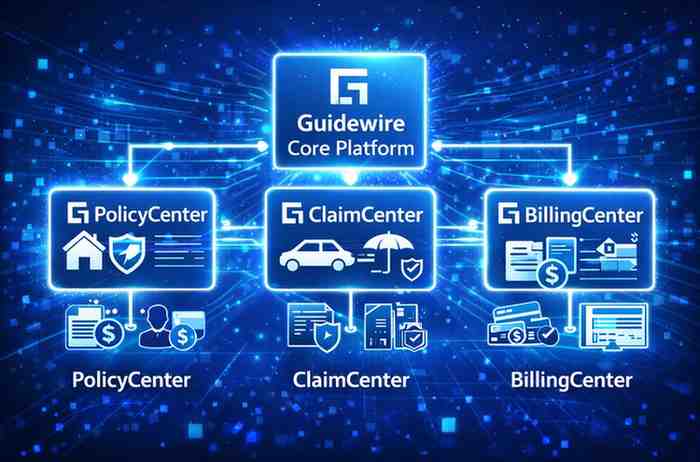
The Guidewire Platform is one of the most widely used enterprise software solutions designed specifically for the insurance industry. It provides a comprehensive suite of applications that support core insurance operations such as policy administration, claims management, and billing processes. Key components of the platform include Guidewire PolicyCenter, Guidewire ClaimCenter, and Guidewire BillingCenter, which together form the backbone of insurance IT infrastructure for many global insurance providers. These applications help insurers manage policy lifecycle processes, claims handling, and financial transactions in an efficient and integrated manner. Because these systems handle complex workflows and sensitive financial data, Guidewire Testing becomes essential to ensure system reliability and accuracy. Implementing Guidewire Automation Testing helps organizations validate business processes, verify integrations, and maintain consistent performance across the entire insurance application ecosystem.
3. Importance of Automation Testing in Guidewire Applications
Large-scale enterprise applications require continuous testing to ensure smooth performance across various modules and integrations. In the insurance domain, where multiple transactions occur daily, Automation Testing in Guidewire Applications significantly improves testing efficiency and reduces manual effort. Automated testing enables QA teams to validate large volumes of test cases quickly while maintaining high accuracy. Using Test Automation Frameworks, organizations can perform regression testing, functional testing, and integration testing without repeating manual steps. This approach helps detect defects earlier in the development lifecycle, improving overall software quality. Furthermore, automation enables faster releases in agile development environments where continuous delivery is essential. By implementing Guidewire Automation Testing strategies, companies can ensure that insurance workflows operate correctly, maintain system stability, and enhance the reliability of mission-critical applications used by insurers worldwide.
4. Overview of GT Frameworks in Guidewire Testing
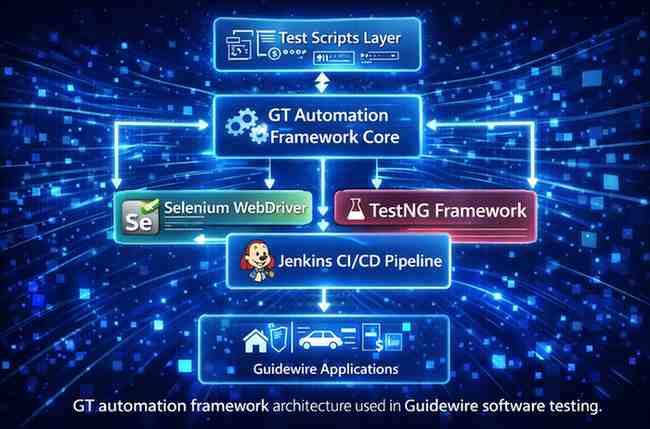
The GT Framework is a specialized automation framework designed to support testing of Guidewire applications efficiently. It provides a structured approach for building scalable automation scripts that can be reused across multiple testing scenarios. One of the main advantages of using GT Automation Frameworks is their ability to integrate seamlessly with modern testing tools such as Selenium and TestNG. These frameworks help testers organize test scripts, manage test data, and execute automated tests across multiple environments. With built-in libraries and reusable modules, Guidewire Testing Frameworks simplify the process of developing automation scripts for complex insurance workflows. As organizations adopt agile and DevOps practices, Automation Frameworks for Guidewire play a vital role in supporting continuous testing and faster deployment cycles. This makes GT Frameworks an essential component in modern insurance application testing strategies.
5. Key Components of GT Automation Framework
A well-designed GT Automation Framework consists of multiple components that work together to support efficient test automation. These components typically include test script libraries, reusable functions, configuration files, reporting tools, and integration modules. By organizing automation scripts into modular structures, Automation Testing Frameworks enable testers to reuse existing code across multiple test scenarios. This approach significantly reduces development time and simplifies maintenance efforts. Another important component of Guidewire Automation Testing Frameworks is the ability to manage test data efficiently. Proper data management ensures that automated tests can simulate real-world insurance scenarios accurately. Additionally, built-in reporting mechanisms allow testers to analyze test results and identify defects quickly. With these capabilities, GT Frameworks for Guidewire Testing provide a powerful environment for executing reliable and scalable automation tests.
Need Demo session? Let’s Connect
6. Tools Used in Guidewire Automation Testing
Automation testing for Guidewire applications often involves the use of several industry-standard tools that support efficient test development and execution. Popular tools used in Guidewire Automation Testing include Selenium for browser automation, TestNG for test management, and Maven for project dependency management. These tools work together within GT Automation Frameworks to create a powerful testing ecosystem. Continuous integration tools such as Jenkins are also commonly used to schedule automated test executions and generate reports. By integrating Selenium Automation Testing with Guidewire frameworks, testers can validate user interface workflows and ensure application functionality across multiple browsers. Additionally, tools for logging and reporting help teams track test outcomes and identify defects more effectively. The combination of these technologies makes Automation Tools for Guidewire Testing highly effective for modern QA environments.
7. Automation Testing Process in Guidewire Projects
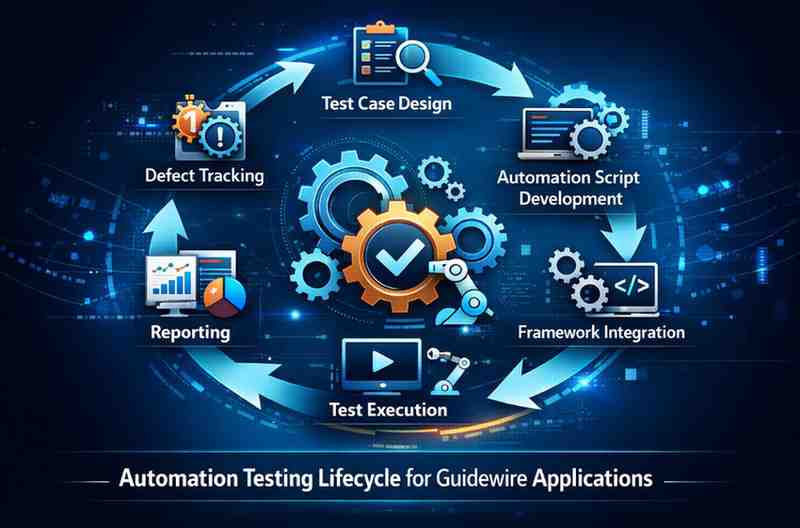
The automation testing process in Guidewire projects follows a structured workflow that ensures consistent test execution and accurate results. The process begins with identifying test scenarios suitable for automation and preparing test cases that represent real business workflows. Using Guidewire Automation Testing Frameworks, testers then develop automation scripts to simulate user interactions and validate system responses. Once scripts are created, they are integrated into the Test Automation Framework for execution across different environments. Automated test runs generate reports that highlight test results, performance metrics, and potential defects. Continuous testing cycles help teams verify application stability after each code update. By following this structured approach, organizations can implement Automation Testing for Guidewire Applications efficiently and ensure that critical insurance processes function correctly in every software release.
8. Guidewire PolicyCenter Automation Testing
Guidewire PolicyCenter Testing focuses on validating policy administration workflows used by insurance companies to manage customer policies. Automation testing helps verify policy creation, updates, renewals, and cancellations within the system. With Guidewire Automation Testing Frameworks, testers can simulate real-world policy transactions and ensure that policy management processes operate correctly. Automation scripts validate data accuracy, business rules, and integration with other insurance systems. Implementing PolicyCenter Automation Testing improves efficiency by reducing manual testing time and enabling faster verification of policy workflows. As insurers increasingly rely on digital platforms for policy management, automation testing ensures that these systems remain reliable and capable of handling complex insurance operations effectively.
9. Guidewire ClaimCenter Automation Testing
Insurance claims processing involves multiple steps, including claim registration, validation, approval, and settlement. Guidewire ClaimCenter Testing ensures that these workflows function correctly and meet business requirements. Automation plays a critical role in validating claims processing systems because manual testing can be time-consuming and prone to errors. By implementing Guidewire Automation Testing, organizations can simulate various claim scenarios and verify system responses under different conditions. Automation scripts help ensure that claims are processed accurately and that financial calculations are handled correctly. This improves the reliability of insurance claim systems while reducing the risk of operational errors. With Automation Testing for ClaimCenter, insurers can maintain consistent system performance and deliver faster claim resolutions to customers.
10. Guidewire BillingCenter Automation Testing
Financial accuracy is crucial in insurance billing operations. Guidewire BillingCenter Testing ensures that billing processes such as invoicing, payments, and transaction tracking function correctly within the system. Automation testing helps validate complex billing workflows and verify that financial data is processed accurately. By using Guidewire Automation Testing Frameworks, testers can automate billing scenarios and ensure that payment processing systems work reliably. Automated tests help detect issues related to billing calculations, payment processing, and system integrations. This approach improves overall financial system reliability and ensures compliance with insurance regulations. Implementing BillingCenter Automation Testing enables insurers to maintain accurate financial operations and deliver seamless billing experiences for policyholders.
Need Demo session? Let’s Connect
11. Integration of GT Frameworks with CI/CD Pipelines
Modern software development practices rely heavily on continuous integration and continuous delivery. Integrating GT Automation Frameworks with CI/CD pipelines allows organizations to run automated tests whenever new code changes are introduced. Tools such as Jenkins enable automated test execution as part of the build process, ensuring that defects are detected early in the development lifecycle. By combining Guidewire Automation Testing with DevOps practices, teams can maintain faster development cycles while preserving software quality. Continuous testing also ensures that new features do not introduce regressions into existing systems. With proper integration, Automation Testing in CI/CD Environments supports rapid software releases while maintaining reliability and stability across complex insurance applications.
12. Benefits of Guidewire Automation Testing
Organizations implementing Guidewire Automation Testing gain several significant advantages. Automation improves test coverage by enabling testers to validate a large number of scenarios quickly and efficiently. It also reduces manual testing effort, allowing QA teams to focus on more complex testing tasks. By using GT Automation Frameworks, companies can achieve faster testing cycles and accelerate software release timelines. Automation also improves defect detection by identifying issues earlier in the development process. Additionally, automated testing ensures consistent execution of test cases, reducing the risk of human error. These benefits make Automation Testing for Insurance Applications an essential component of modern QA strategies within the insurance technology industry.
13. Career Opportunities in Guidewire Automation Testing
The demand for skilled professionals in Guidewire Automation Testing is growing rapidly as insurance companies continue to modernize their digital platforms. Organizations require experienced testers who understand both the insurance domain and modern automation technologies. Professionals with expertise in Guidewire Testing Frameworks, Selenium automation, and QA methodologies are highly valued in the industry. Career opportunities include roles such as automation tester, QA engineer, test automation developer, and Guidewire testing consultant. With increasing adoption of automation frameworks, Automation Testing Careers in the Insurance Domain offer excellent growth potential for IT professionals. Learning Guidewire testing tools and automation frameworks can open doors to high-demand roles within global insurance technology companies.

14. Future of Guidewire Testing and Automation Frameworks
The future of Guidewire Automation Testing is closely tied to emerging technologies such as artificial intelligence, cloud computing, and advanced test automation tools. AI-powered testing solutions are beginning to enhance traditional automation frameworks by enabling intelligent test generation and predictive defect analysis. As insurance companies adopt cloud platforms, Cloud-Based Guidewire Testing is becoming increasingly important. Automation frameworks are also evolving to support microservices architectures and distributed systems. These advancements will enable testers to validate complex insurance platforms more efficiently. With ongoing innovation in Automation Testing Frameworks, the role of automation in Guidewire testing will continue to expand, supporting faster software delivery and improved application reliability.

15. Conclusion
In today’s competitive insurance technology landscape, Guidewire Automation Testing plays a vital role in ensuring the quality and reliability of enterprise insurance applications. By implementing GT Automation Frameworks, organizations can automate complex testing processes, reduce manual effort, and improve testing efficiency. Automation frameworks help QA teams validate critical systems such as Guidewire PolicyCenter, Guidewire ClaimCenter, and Guidewire BillingCenter with greater accuracy and speed. As digital transformation accelerates across the insurance industry, the demand for skilled professionals in Automation Testing for Guidewire Applications will continue to grow. By mastering automation frameworks and testing tools, QA professionals can contribute to building high-quality insurance software while advancing their careers in this rapidly evolving technology domain.